

Explore Previous Research Studies
LivingScroll.org offers a series of participatory studies inspired by the Cochin Hebrew New Testament manuscripts, exploring how ancient sacred texts can be received, practiced, and reflected on today. Each study invites people from diverse backgrounds to engage with Scripture through simple guided activities, personal reflection, and brief observations. Join us as we discover how these ancient manuscript traditions continue to speak, shape, and come alive in modern lives.
-
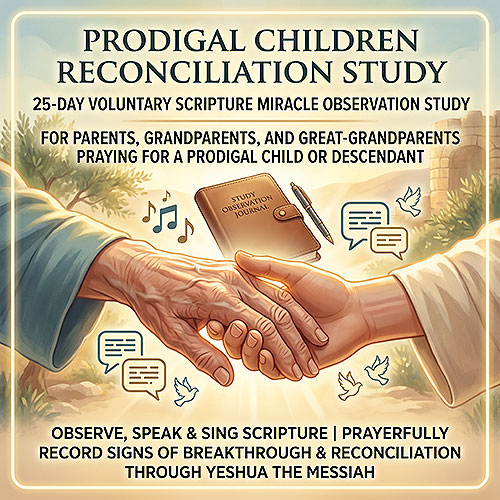
Prodigal Children Prayer and Reconciliation Study
Speaking the Word Brought Inspiration—Singing It Went Even Further
What happens when parents and grandparents move beyond silently reading Scripture and begin speaking—and then singing—God’s promises over their prodigal children? This three-phase study followed participants as they first went about their usual day, then spoke six assigned passages aloud, and finally sang those same passages: Acts 16:31; Isaiah 44:1–5; Luke 15:20; Philippians 4:6–7; Hebrews 4:12; and Psalm 91. The study explored changes in faith, resolve, joy, spiritual resistance, perceived closeness to reconciliation, and family interactions.
Speaking Scripture was associated with 13.7% better overall outcomes than the usual-day phase, while singing Scripture was associated with 16.1% better outcomes. Singing also produced approximately 5% greater spiritual inspiration than speaking, suggesting that adding melody may deepen engagement with God’s Word. These findings are encouraging self-reported patterns, not proof of cause and effect.
Why the Singing Result MattersPhase 3’s stronger result is especially meaningful in light of Janice F. Baca’s published paper, When Song Becomes Victory: zāmar, Power-of-God-Singing, and the Cochin Hebrew New Testament. The paper proposes “Power-of-God-singing” as a cautious theological category for intentional, God-directed singing associated throughout Scripture with worship, spiritual relief, restoration, deliverance, and victory. Biblical examples include Israel’s song after crossing the sea, David’s music bringing relief to Saul, singers preceding Jehoshaphat’s army, and the songs of victory in Revelation. The power is not attributed to music itself, but to God; singing is understood as an embodied act of faith, praise, proclamation, and alignment with Him. In this study, singing the assigned Scriptures produced approximately 5% greater spiritual inspiration than speaking them, providing encouraging practical support for the paper’s central proposal.
A Prodigal Heart Turns Toward the Word of God!
During Phase 3 of the Prodigal Son Study, Tammy began speaking her brothers' names as she completed the Scripture assignment. One brother had been distant from faith for years, and she longed to see him turn back toward the Word of God.
Then an unexpected phone call brought joyful news: her brother had found an audio Bible app, begun listening to Scripture, and started using its devotional three times a day. Because reading is difficult for him, the audio format opened an accessible new way for him to receive the Word.
For Tammy, the call was an answer to prayer and the encouraging beginning of a prodigal heart turning toward Scripture.
“I have to say, this is a direct result of adding his name to the ‘Prodigal Son Study’! He truly has been a Prodigal Son for many years! … I’m just so happy to hear his report!” —Tammy
Discover the Book Behind the StudyExplore the biblical and manuscript foundations of “Power-of-God-singing” in Janice F. Baca’s book, The Power of God Singing: In the Hebrew New Testament. The book examines how God-directed singing is connected with worship, faith, restoration, deliverance, and victory—while affirming that the power belongs to God, not to music itself.
Available on Amazon: https://www.amazon.com/dp/B0G2G53WGM
PDF Prodigal Child Study Final Outcome.pdf
Read the Full Article📖 Read “When God’s Word Takes Voice: The Transforming Power of Speaking and Singing Scripture”
https://livingscroll.org/articles/when-gods-word-takes-voice
-
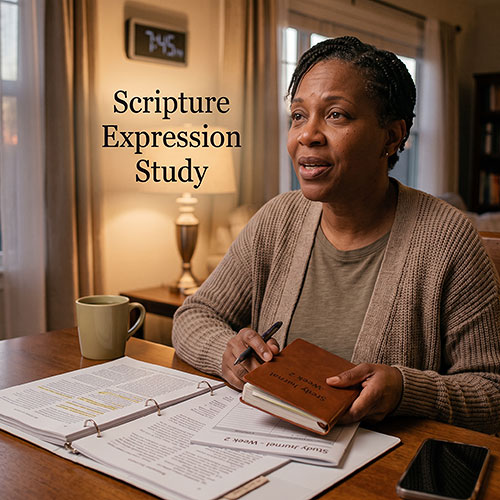
Comparative Scripture Expression Study
For followers of Yeshua, Scripture is central to worship, prayer, meditation, and daily devotion. This study was designed as a simple, structured way for participants to engage with Scripture consistently and record brief daily reflections during the study period.
This 15-day study included three easy-to-follow phases: a baseline period, a spoken Scripture period, and a sung Scripture period. Each evening after sundown, near the beginning of the biblical day and before bedtime, participants set a 15-minute timer and engaged with the pre-selected Scriptures for that day. They then completed a short survey with observations about the day that had just ended.
During the Scripture expression phases, participants used the same selected passages: Isaiah 53:5, Philippians 4:6–7, and Psalm 91:1–16. We provided these passages in the NRSVUE translation for consistency and ease of reference, but participants were also welcome to use their preferred Bible translation. The purpose was not to evaluate a specific translation, but to observe daily self-reported reflections while participants engaged with the meaning of Scripture through spoken and sung expression.
PDF scripture-expression-study-speaking-or-singing-the-word-results-final-results.pdf
Read the Full Article📖 Read “When God’s Word Takes Voice: The Transforming Power of Speaking and Singing Scripture”
https://livingscroll.org/articles/when-gods-word-takes-voice